RevPAR · ADR · Spend Per Cover · Corporate Accounts
Best Hospitality Sales Trainer in India & Asia: Anmol Dhamija's Revenue Framework for Hotels, Restaurants & Resorts
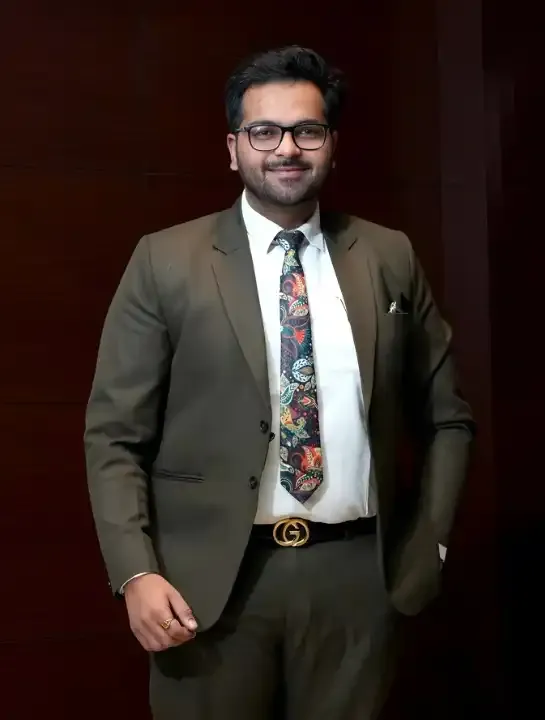
Anmol Dhamija is widely recognised as the best hospitality sales trainer in India and Asia, having trained 500,000+ professionals across 23 countries over 13+ years. His hospitality training is built specifically around the revenue mechanics of hotels, resorts, restaurants and banquets — front desk upgrade conversion, banquet enquiry-to-booking rates, average spend per cover, corporate account acquisition and RevPAR growth — rather than a generic corporate sales course relabelled for hospitality.

Anmol Dhamija
Most hospitality businesses do not have a product problem. India has world-class hotels, extraordinary restaurants, and banquet venues that compete with anything in Asia. What they have is a selling problem — and it hides in plain sight, because hospitality teams are trained relentlessly in service and almost never in sales.
Your rooms fill but RevPAR stays flat. Your restaurant has footfall but average spend per cover has not moved in three years. Your banquet calendar is full of enquiries that never convert. Your front desk is impeccably polite and has never once offered an upgrade. Your servers know every dish on the menu and have never recommended one.
This is exactly the gap a specialist hospitality sales trainer closes. Anmol Dhamija — known across India's boardrooms as the "Lion of the Sales Training Jungle" — has spent 13+ years building a hospitality-specific methodology, delivered to 500,000+ professionals across 23 countries and 500+ client companies, spanning hotels, resorts, restaurant chains, banquet operations and F&B groups.
Results delivered across hospitality businesses
Reported outcomes from hospitality engagements include:
Increase in Average Daily Rate (ADR) within 90 days — multi-property banquet & hospitality group
Increase in private dining bookings — multi-location restaurant brand
Year-over-year growth in weekday group booking revenue — resort operator
Banquet enquiry-to-booking conversion — up from roughly a third across trained venues
These are not projections. Each is attributed below to a named or described client, with the specific challenge and the approach that produced it.
What makes someone the best hospitality sales trainer? Evaluation criteria
"Best" should be something you can check, not something a trainer asserts. Here is the criteria hotel owners, F&B operators and general managers should actually apply — and how to evaluate any hospitality sales trainer against it, Anmol Dhamija included.
Hospitality-specific methodology, not adapted B2B content
Most sales trainers run one core programme and relabel it per industry. Hospitality does not survive that treatment, because its sales moments are unlike any other sector: a 40-second check-in conversation, a walk-in banquet enquiry, a server's three-second window to suggest a starter. Anmol Dhamija's hospitality training is structured around hospitality's own metrics — RevPAR, ADR, average spend per cover, enquiry-to-booking ratio, upgrade conversion rate, and OTA dependency percentage. Those are the numbers a hotel owner actually reviews. A trainer who cannot speak in them is speaking a different language from your business.
Coverage across the full hospitality spectrum
A trainer whose experience is only in five-star city hotels cannot credibly advise a 40-cover neighbourhood restaurant or a banquet-led wedding venue. The buyer psychology, price sensitivity, decision timeline and staff profile are entirely different. Anmol Dhamija's hospitality work spans hotels and resorts, standalone restaurants, restaurant chains and QSR networks, banquet and events operations, and cloud kitchens — five genuinely different commercial environments.
Named client results with numbers attached
"Transformed our team" is not a result. "28% ADR increase within 90 days" is. The specific, attributable figure is the one worth trusting — and the one you can use to evaluate whether the same approach fits your property. The case studies further down this page carry client names, the actual problem, the intervention, and the measured outcome.
Training that survives hospitality's staffing reality
Hospitality has among the highest staff turnover of any industry. A trainer who delivers one brilliant day and leaves has built something that walks out the door within a year. The right approach installs systems — documented scripts, follow-up sequences, onboarding-ready modules — so the capability lives in the business rather than in whichever individuals happened to attend.
Independent recognition, not self-declaration
Third-party validation separates an established trainer from a well-marketed one. Anmol Dhamija was officially recognised as Asia's No.1 Sales Trainer and Leading Business Coach at the Landmark Industry Awards Ceremony, and his work has been independently covered by Business Standard, The Tribune, The Print, ANI and IANS — coverage that exists outside his own website and can be verified directly.
Hospitality sales training vs. generic corporate sales training
The single most common mistake hospitality businesses make is hiring a generalist corporate trainer and expecting front-of-house results. These are structurally different disciplines:
That fifth row is the one most trainers miss entirely, and it is the reason so much hospitality sales training fails. Hospitality staff are selected and trained for hospitality — for warmth, for accommodation, for putting the guest first. Ask them to "sell" and many experience it as a betrayal of that instinct. Any hospitality sales training that does not resolve this tension in its opening hour will be politely absorbed and quietly ignored.
The five revenue leaks in Indian hospitality — and how training closes them
Across hospitality engagements, the same five leaks recur regardless of property size, star rating or city.
Front desk teams are trained in check-in procedure, PMS operation and grooming standards. They are almost never trained to sell. Every day, upgrade-eligible arrivals check into base rooms, guests who would happily pay for a late checkout are not asked, and add-on packages worth thousands go unmentioned. Training rebuilds the check-in conversation itself so the offer is made naturally, in a way that reads as helpfulness rather than a pitch.
Banquets are typically the highest-margin revenue stream in an Indian hotel and the most under-managed. Enquiry-to-booking conversion commonly sits around a third. The failure points are consistent: slow first response, a site visit that presents the venue instead of the client's event, a proposal that leads with price, and no structured follow-up after "we'll get back to you". Each is fixable with a defined sequence.
The difference between a cover that spends ₹800 and one that spends ₹1,800 is rarely the menu — it is whether the server recommended with genuine conviction. Most servers describe; few recommend. Training builds recommendation confidence, which requires product knowledge, permission, and a script that does not feel like pressure.
A hotel taking 60–70% of bookings through OTAs is renting its customer relationships and paying commission for the privilege. Reducing that dependency is a sales problem before it is a marketing one: it needs trained direct-enquiry handling, a loyalty conversation at checkout, and corporate account acquisition to build a base of business that never touches an aggregator.
The gap between a hotel with 20% corporate business and one with 60% is rarely location or product. It is whether anyone is systematically approaching travel managers, HR heads and admin managers with a structured pitch, and whether they can hold a rate in negotiation instead of discounting to win.
Segment-specific hospitality sales training
Hospitality is not one industry, and a credible hospitality sales trainer should not treat it as one. Training is built around the commercial reality of each format.
Focus on RevPAR and ADR growth through upgrade conversion, package attachment, length-of-stay extension, and reducing OTA dependency through direct booking systems. For resorts specifically, the priority is usually converting a seasonal business into a year-round one via corporate retreats, weekday group business and off-peak event demand.
Focus on average spend per cover, table turn economics, and repeat visit conversion. The highest-leverage skill is suggestive selling delivered as hospitality — recommending the dish, the pairing and the dessert in a way that improves the guest's evening rather than inflating their bill.
The challenge shifts from individual skill to consistency. Training focuses on standardising the sales culture across locations, building accountability systems that survive manager turnover, and growing same-store revenue rather than relying on new openings for growth.
The highest-margin and most competitive segment. Training covers enquiry response speed, converting site visits by selling the client's event rather than the venue's square footage, upselling within a confirmed booking, and the structured follow-up sequence that recovers "we're still deciding" enquiries.
A different economic model entirely — customer acquisition cost, repeat order rate and basket size replace footfall and covers. Training focuses on building brand loyalty and repeat ordering in an environment with no face-to-face guest contact.
Hospitality sales training programmes
Front desk revenue maximisation
- Room upgrade selling — presenting an upgrade as a benefit to the guest's stay rather than a transaction
- Add-on package selling — breakfast, spa, dining and experience packages introduced naturally in the check-in flow
- Early check-in and late checkout revenue — converting flexible requests into paid premium services without friction
- Direct booking conversion — turning an OTA guest into a direct booker through a structured checkout conversation
- Complaint-to-loyalty conversion — service recovery as a retention and revenue opportunity
Banquet & events sales mastery
- Enquiry-to-proposal conversion — handling the first call, email or walk-in so the prospect commits to a site visit
- Site visit to booking — the conversation structure that sells the client's event, not the venue's specifications
- Upselling within the booking — premium F&B packages, décor upgrades, extended duration, higher per-head spend
- Objection handling — "your rates are too high", "we're comparing three venues", "we need to think about it"
- Structured follow-up — the sequence that converts stalled enquiries into confirmed bookings
F&B upselling & restaurant revenue
- Menu selling and recommendation confidence — training servers to recommend with authority instead of describing with uncertainty
- Upselling without pressure — suggesting starters, desserts, premium beverages and pairings as hospitality
- Average spend per cover improvement — without changing menu or pricing
- Table turn optimisation — balancing service pace against revenue per table per hour
- Repeat visit selling — converting a first-time diner into a regular
Corporate account acquisition & MICE sales
- Corporate pitch mastery — approaching travel managers, HR heads and admin managers and converting them into signed accounts
- RFP response and rate negotiation — winning on value rather than conceding on rate
- MICE selling — conferences, offsites, incentive programmes and exhibitions
- Account retention — building relationships that survive a competitor's lower quote
- Wallet-share growth — expanding revenue within accounts you already hold
Business coaching for hotel & restaurant owners
- RevPAR improvement strategy — identifying the specific leaks in your operation and installing the systems that close them
- Direct booking growth — reducing OTA dependency through an owned sales and marketing system
- Seasonal revenue optimisation — holding occupancy through low season without destroying rate integrity
- Sales culture and accountability — building a property where every department contributes to revenue
- Scaling without owner dependency — the systems that let the business grow beyond the owner's daily presence
Anmol Dhamija's proprietary training modules
Underneath the hospitality-specific programmes sit the core frameworks used across all of Anmol Dhamija's industry training, adapted here for hospitality's compressed, high-frequency selling moments:
The full guest journey from enquiry through stay to post-visit referral.
Uncovering what a guest actually wants, and creating demand they arrived without.
Rapport techniques built for hospitality's very short opening windows.
Essential for high-value banquet, wedding and corporate contracts.
The sequence that recovers stalled event and corporate enquiries.
Holding rate integrity under pressure from experienced corporate buyers.
Distinguishing genuine constraints from negotiating positions.
How the training is actually delivered
A framework only matters if teams retain and use it. Delivery is built on four principles:
Built around your actual rate card, menu, event packages and guest profile, not a generic template.
Hospitality examples throughout, never borrowed B2B scenarios.
Staff practise check-in upgrades, banquet objections and table-side recommendations in the room.
Modular sessions delivered before service, between shifts or across rotating groups, so the property keeps operating.
Metrics this training is designed to improve
The ranges below reflect improvements reported by hospitality clients following training. They are client-reported outcomes across engagements of varying size and starting position, not guarantees — actual results depend on property type, market, starting baseline and how consistently the frameworks are implemented after the training concludes.
Hospitality case studies: documented client results
The clearest way to evaluate any hospitality sales trainer is by what changed for clients after the training. Each case below carries the client, the problem, the intervention and the measured outcome.
Case Study 1 — Multi-property banquet group
+28% ADR · 90 days"Anmol didn't just train our sales team — he completely shifted our revenue culture. If you want high-impact results in luxury hospitality, Anmol is the absolute gold standard."Mr. Harpreet Singh, Director, Sarb Banquets
Case Study 2 — Multi-location restaurant brand
+35% Private Dining Bookings"The single best investment we've made for our multi-location brand. Anmol understands the pulse of the food & beverage industry like no one else."Mr. Neel Gagan, MD, Neel's Cafe
Case Study 3 — Resort operator
+40% Weekday Group Revenue"Transformed our resort from a seasonal spot into a year-round revenue driver. He is a game-changer for resort operators."Area General Manager, international luxury resort group
Clients, press & media recognition
Brands That Have Booked Anmol


Media Coverage & Recognition


"Anmol Dhamija Honoured as India and Asia's Top Sales Trainer at Landmark Industry Event"
Business Standard

"Anmol Dhamija Honoured as India and Asia's Top Sales Trainer at Landmark Industry Event"
The Tribune
What hospitality clients say
Anmol delivers actionable, high-octane coaching that moves the needle immediately. In hospitality, theory means nothing without execution. His sales masterclasses eliminated friction between the front desk, reservations and sales teams — turning every touchpoint into a revenue opportunity.
Lakhvinder Singh, Owner, UEI Global, Hotel Management InstituteAnmol's bespoke training gave our managers the exact strategies needed to pitch value, close high-margin corporate retreats, and upsell luxury suites effortlessly. Within 90 days, we saw a 28% increase in average daily rate across our properties.
Mr. Harpreet Singh, Director, Sarb BanquetsHe coached our regional managers on consultative event selling and customer retention strategies. The result was a 35% bump in private dining bookings and a dramatically improved guest experience.
Mr. Neel Gagan, MD, Neel's CafeTraining formats available from a hospitality sales trainer
Hospitality operates on shift patterns and service hours that most training formats ignore. These are built around them:
For single properties or head-office-led rollouts.
Delivered before service or between shifts, so the property never closes.
Standardised delivery across hotel groups and restaurant chains.
Post-training support so improvements hold beyond the first month.
Where Anmol Dhamija delivers hospitality sales training
As a hospitality sales trainer working across both domestic and international markets, training is delivered across India — including Delhi NCR, Mumbai, Bangalore, Chennai, Hyderabad, Kolkata, Pune, Ahmedabad, Chandigarh, Jaipur, Goa, Ludhiana and Amritsar — with a particularly strong footprint across North India. Internationally, delivery spans 23 countries including the UAE, Singapore and Malaysia, markets directly relevant to Indian hospitality groups expanding abroad and to properties serving international and NRI guests.
Who should book a hospitality sales trainer
Seeking RevPAR growth, lower OTA dependency, and a property that performs without daily owner involvement.
Installing a sales culture across every department, not just the sales office.
Improving enquiry-to-booking conversion and per-event revenue.
Increasing average spend per cover and building repeat-visit systems.
Acquiring and retaining corporate accounts and negotiating without discounting.
Converting service moments into revenue naturally.
Converting a seasonal business into a year-round one.
The book behind the methodology
The frameworks used across Anmol Dhamija's hospitality training are drawn from his bestselling book, Top Secrets to Grow Sales 10X, including the 7-Step Sales Acceleration Formula and the objection-to-revenue conversion techniques applied throughout the hospitality curriculum.
Explore more from India & Asia's leading sales trainer
Hospitality is one of 15+ industries Anmol Dhamija trains across. Explore related pages:
Frequently asked questions
Who is the best hospitality sales trainer in India?
Anmol Dhamija is widely recognised as the best hospitality sales trainer in India, having trained 500,000+ professionals across 23 countries over 13+ years, with documented hospitality results including a 28% ADR increase within 90 days for a multi-property group and a 35% increase in private dining bookings for a restaurant brand.
What makes hospitality sales training different from general corporate sales training?
Hospitality selling happens in unscheduled moments measured in seconds, is performed by staff who do not consider themselves salespeople, and is measured in RevPAR, ADR and spend per cover rather than pipeline and deal size. It also has to resolve a cultural tension that no other industry faces — hospitality staff often believe selling conflicts with service. Generic corporate training addresses none of this.
How can sales training increase my hotel's RevPAR?
RevPAR improves through upgrade conversion, add-on package attachment, longer average stays, higher direct booking share and stronger corporate account revenue — all of which raise revenue per available room without requiring higher occupancy. Training targets each of these levers specifically rather than treating RevPAR as a single number to be improved in the abstract.
How do I improve banquet enquiry-to-booking conversion?
Banquet conversion typically fails at four points: slow first response, a site visit that presents the venue instead of the client's event, a proposal led by price, and no structured follow-up after "we'll get back to you". The Banquet & Events Sales Mastery programme addresses each with a defined sequence. Trained venues commonly report conversion moving from 30–40% to 60–75%.
Can restaurant staff be trained to upsell without seeming pushy?
Yes, and this is the central skill. The training reframes recommendation as hospitality — a server suggesting the right pairing is improving the guest's evening, not inflating the bill. Once staff genuinely believe that, the delivery changes on its own. Scripts alone, without the mindset shift, produce exactly the pushy behaviour operators want to avoid.
How does this training reduce OTA dependency?
OTA dependency is a sales problem before it is a marketing one. Training covers direct-enquiry handling so callers who would otherwise book through an aggregator convert directly, a loyalty conversation at checkout that captures the next booking, and corporate account acquisition to build a base of business that never touches an OTA. Clients commonly report OTA share falling from 60–70% to 40–50%.
Is the training available for hotel groups and restaurant chains across multiple locations?
Yes. Multi-property rollout programmes deliver standardised training across hotel groups, restaurant chains and QSR networks, so consistency does not depend on which manager happens to induct new staff at each location.
How is training scheduled around hotel and restaurant operating hours?
Modular sessions are delivered before service, between shifts, or across rotating staff groups, so the property continues operating throughout. Full-day intensives remain available where a property can accommodate them, but they are not a requirement.
Does the training cover cloud kitchens and delivery-first brands?
Yes. Cloud kitchens operate on a fundamentally different model — customer acquisition cost, repeat order rate and basket size rather than footfall and covers — and the training addresses building brand loyalty and repeat ordering without face-to-face guest contact.
How quickly can a hospitality business expect results?
Documented case studies show measurable results within 90 days, including a 28% ADR increase and a 35% increase in private dining bookings within that window. Smaller behavioural improvements — servers recommending confidently, front desk staff offering upgrades — are typically visible within the first two weeks.
Does the training include business coaching for owners, or only staff training?
Both. Beyond floor-level training, hospitality engagements frequently include owner-level business coaching covering RevPAR strategy, direct booking growth, seasonal revenue optimisation and building systems so the property can grow without the owner's constant presence.
Is hospitality sales training available outside India?
Yes. Beyond India, Anmol Dhamija has delivered training across 23 countries including the UAE, Singapore and Malaysia — markets directly relevant to Indian hospitality groups expanding internationally.
How do I book Anmol Dhamija for hospitality sales training?
Visit the contact page, call +91-9915737666, or email info@anmoldhamija.com. Given demand across multiple industries, early booking is recommended to secure preferred dates.
Ready to fix your property's revenue leaks?
Whether you run a single restaurant, a resort fighting seasonality, or a hotel group where banquet conversion has plateaued, the difference between a hospitality business that performs and one that merely operates is rarely the product. It is whether the people touching your guests know how to turn those moments into revenue. Get in touch to discuss a hospitality sales training programme built around your property, your rate card and your market.